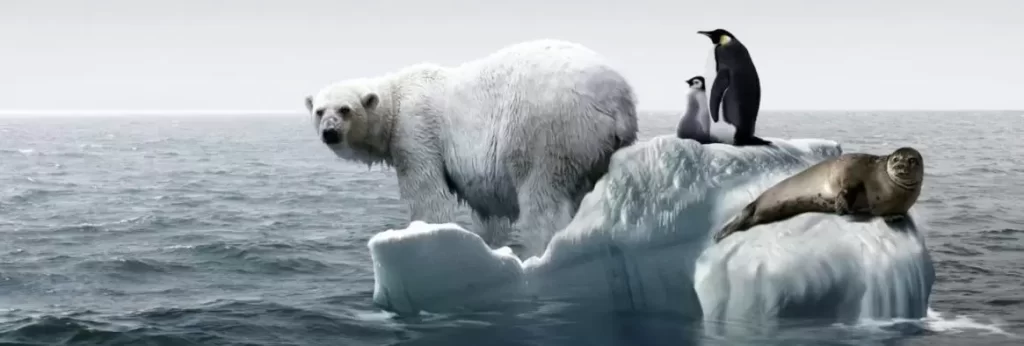
Climate change is now widely recognized as a crisis that affects humanity and the environment on a global scale; in short, it impacts the lives and even the lineage of every living being on the planet. Numerous scientific articles/papers and political statements emphasize this situation.
The United Nations Climate Change Panel (IPCC) “Global Warming Report of 1.5°C” will play a guiding role in the path that world countries will follow and the decisions they will take against global climate change. According to the report, the fact that global temperatures will rise above 2°C compared to the pre-industrial era will not result in the loss of only fertile lands and species; the melting of icebergs and the rise in sea levels will lead to severe consequences that will directly affect human life, health, security, and economy.
Finally, in the IPCC 2021 Climate Change Report, it was stated that climate change has reached an irreversible point and that the limits set in the Paris Agreement are likely to be exceeded.
The commitments, intentions, and promises given by governments in global agreements/conferences are not of long duration and have high expectations for realization.
In this context, there is a global awareness at the level of discourse; however, we can say that governments have not fully taken action yet, as economic interests are still being considered at the level of action.
Even if conscious individuals take action on their own, it is known that this will not have much benefit on a global scale. Therefore, governments must make strong commitments and, in order to implement them, they must first create and publish realistic and scientific action plans. It is predicted that governments will not give up economic interests when creating and implementing their action plans. It is not possible for the economic costs of fighting climate change, which approximately 200 countries, especially the majority of large countries, will face, to be covered. Then; the costs of fighting climate change must be shared, and the “polluter pays” principle should be applied, transferring funds from countries with high emission rates to other countries. Since Turkey is also eligible for these funds, it should benefit from them. These arrangements are being made through projects led by the “United Nations” and/or the “European Commission”.
For example, EU countries, with the EU Green Deal, have started to follow policies aimed at transforming the European economy to achieve a “carbon-neutral continent” by 2050, reducing carbon emissions by 55% by 2030. In this context, the EU shares the innovation risk with project supporters. That is, it has declared that costs will be shared. One of the most important arrangements made is the “Carbon Border Adjustment Mechanism” (Carbon Border Adjustment Mechanism; briefly “CBAM”) led by Europe, which we will frequently hear about and be affected by from now on.
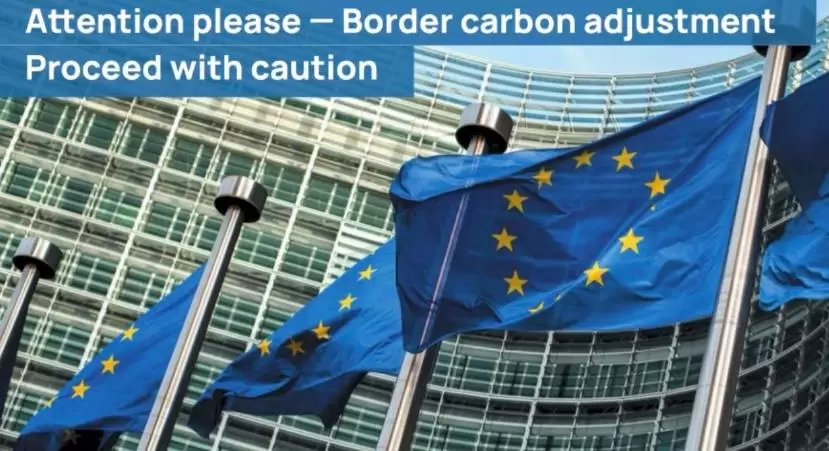
On the official website of the European Commission, there is the statement: “CBAM will help reduce the carbon leakage risk by encouraging producers in non-EU countries to green their production processes.” Its basis is as follows; Europe applies strict measures within its own borders to reduce emission values and keep them at the lowest level. The EU does not want businesses operating within its borders to purchase goods and/or raw materials produced in countries that do not apply strict measures and are not subject to such regulations. Because businesses that avoid strict measures in the EU can produce and/or purchase goods and/or raw materials at lower costs in other countries.
That is, in order to prevent carbon leakage from Europe to other parts of the world, a supportive regulation has been established to encourage or make it mandatory for other businesses that produce goods and/or raw materials to be imported into Europe to apply similar measures or reduce their emissions. Businesses operating within the EU borders that produce goods and/or raw materials above the determined limits will have to pay an additional customs duty. As a result, these businesses will want to purchase goods and/or raw materials with lower CO2 emissions per ton. For this reason, businesses producing in Turkey and exporting to the EU must first create an inventory of their CO2 emissions and then take the necessary measures to reduce them. It is estimated that the implementation of this process will reach 2026 and the transition process will start in 2023. In order not to lose income from exports, businesses in Turkey must be ready by 2023.
With the implementation of the emission trading system or taxes, the emission limits determined for specific sectors by governments or international unions will become factors that determine companies’ profitability and even their survival. Companies/businesses that exceed the emission upper limit will be at a disadvantage in carbon allocation; they will face financial disadvantages due to extra taxes applied to their products; while companies below the emission upper limit will provide financial advantages.
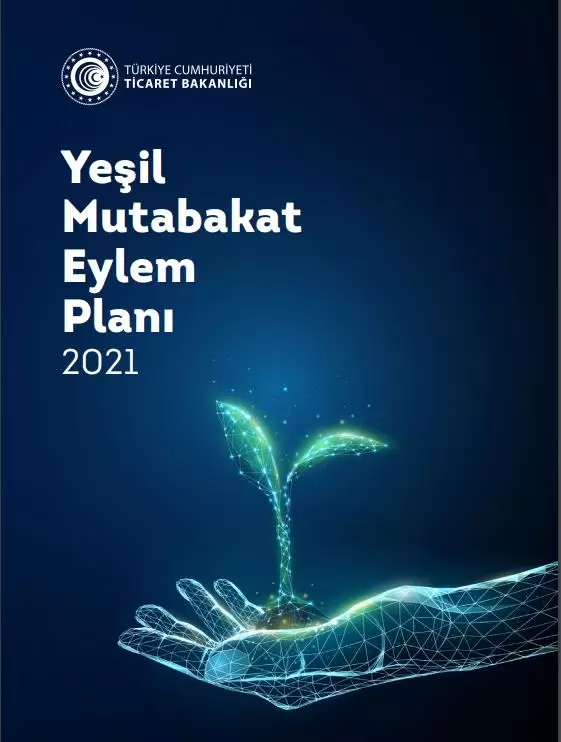
A action plan has been published to ensure that the economy in Turkey is not negatively affected and even positively affected. In this plan published by the Ministry of Economy, there are topics such as carbon border adjustment, fighting climate change, sustainability, etc. In the “Green Deal Action Plan Calendar” in the plan, action plans based on time deadlines are mentioned. However, there is no information about the content of the action plans.
In all this context, companies/facilities/factories must make short, medium, and long-term projections and create a roadmap. The most striking point we encountered in this case is that due to lack of information, companies/facilities/factories do not know what they will do.
The first step that companies/facilities/factories should take is to create a roadmap and prepare a feasibility study for the possible services to be received. In this way, the service to be received and the time deadline can be determined, and unnecessary time loss and financial losses can be avoided. If necessary, these businesses can also receive services for creating a roadmap for short-medium-long term periods. In this way, they can prepare effectively and quickly.
When we look at the big picture, the main global goal is to first reduce and then eliminate carbon emissions. So, in order to reduce something, we first need to know how much we consume and produce. In order to reduce the carbon footprint, it is necessary to first calculate the reference period emissions. Emission calculations should be done with the best data, avoiding rough estimates, and the emissions should be calculated at the lowest and most accurate level possible. After performing the most accurate emission calculation possible, measures should be taken to reduce emissions. All improvement efforts from the reference point should be recorded. For example; choosing fuels that emit less greenhouse gas, using more efficient boilers, compressors, etc. equipment, selecting machinery and equipment that offer high efficiency close to complete combustion. After all these, reducing emissions is still within our control. For example, while continuing to draw electricity from the grid, you can reduce emissions from electricity usage by making agreements with businesses that produce electricity from green energy and have an IREC certificate. If your company has a goal like carbon neutrality, you can establish and operate a power plant that produces electricity from green energy. It should not be forgotten that during the project phase, you will need to have your project approved by the relevant and supervisory institutions at the United Nations.
In the struggle against climate change, along with governments, companies/facilities/factories also have increasing responsibilities. It is estimated that companies with high carbon emissions will face extra carbon costs through mechanisms such as “Carbon Border Adjustment” or “Emission Trading System”. By simple logic; governments that struggle against climate change will face high economic costs for the measures they will take. These costs will first be imposed on companies operating in heavy industry. Then, these companies will increase the prices of goods/raw materials to balance the increased costs and, ultimately, the cost of living for the final consumer will increase. This is a situation that all of humanity is responsible for.
We have brought our planet to this point and we must pay a high price to save it.
GÖKÇE PARER (AVRASYA Verification Board Inc. – President)